Anderson Investigative Associates — Navbar

Category: Event

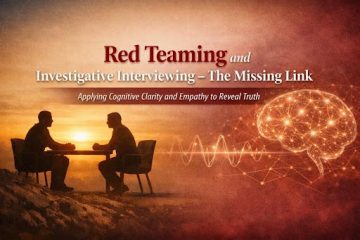
Article 5: Red Teaming and Investigative Interviewing; The Missing Link

The Human Element in Investigation Every interview is a meeting between two human beings, each carrying their own experiences, assumptions, and emotions into the room. The interviewer seeks truth, but truth is rarely simple. It hides behind perception, memory, fear, and bias. The quality of an interview depends not only on technique but on the interviewer’s ability to think clearly,

Read More »

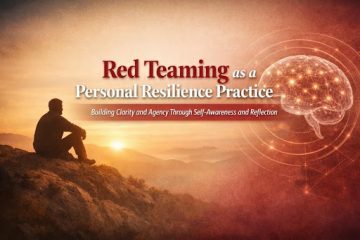
Article 3: Red Teaming as a Personal Resilience Practice

The Inner Landscape of Decision-Making Every decision we make begins inside us. It starts with the quiet interplay of memory, emotion, and belief. We like to think our choices are rational, but most of them are shaped by patterns we learned long before we were aware of them. Those patterns help us move through life efficiently, yet they also limit

Read More »

Article 2: Red Teaming, The Predictable Ways Humans Court Failure

The Quiet Patterns of Human Error There is a quiet truth about human behavior that most of us would rather not admit. We do not fail because we are careless or unmotivated. We fail because we are human. We fail in patterns. We fail in ways that are so predictable that psychologists have been mapping them for decades. And we

Read More »

Article 1: What Red Teaming Really Is

The Limits of Instinct There are moments in our work and in our lives when we realize that the way we have always approached things is no longer enough. We sense it in the tension that builds when decisions feel rushed. We see it in the patterns we repeat without noticing. We feel it in the quiet pressure to agree,

Read More »

Evidence-Based Suspicion: The Cornerstone of Science-Based Interviewing

In recent months our focus has been on procedural justice and science-based interviewing practices. We have focused on specific issues, but the key is getting these practices into the hands of interviewers. In this blog, I want to explore the issue of evidence-based suspicion and its importance in the arena of science-based interviewing. This topic requires some self-reflection and evaluation

Read More »