 Anderson Investigative AssociatesScience-Based Interview & Investigation Training
Curiosity over certainty: science-based communication for modern leadership.
Transforming high-stakes conversations with dignity, discipline, and behavioral science. Mark A. Anderson doesn't just teach communication — he reshapes how audiences perceive human behavior, bridging federal investigations and everyday leadership.

A nationally recognized expert in high-stakes conversation
Mark A. Anderson is a nationally recognized expert in science-based interviewing and communication. With over four decades of experience across the U.S. Department of Justice, FBI, U.S. Nuclear Regulatory Commission, and state agencies, Mark has mastered the art of the high-stakes conversation.
As the Director of Training & Development for Anderson Investigative Associates, Mark challenges the status quo of "interrogation" and rigid leadership. His signature philosophy — Curiosity Over Certainty — is a framework that reduces bias, improves decision-making, and strengthens trust in any professional setting.
Mark is a featured expert in Authority Magazine and a sought-after speaker for the Association of Inspectors General, the Institute of Internal Auditors, and the Federal Law Enforcement Training Center (FLETC).
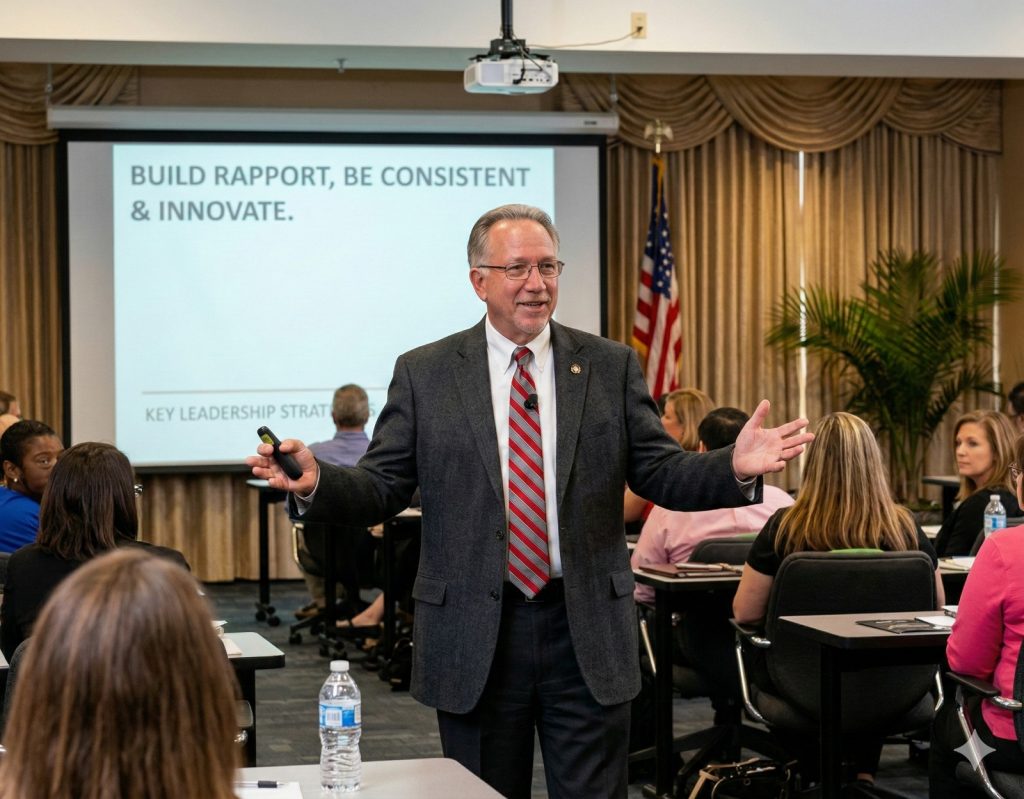
Content that's as engaging as it is educational
Event organizers trust Mark to deliver content audiences remember long after the room empties.
- Experience You Can Trust: Insights drawn from 40+ years with the DOJ, FBI, NRC, and federal oversight communities.
- Science, Not Speculation: Mark cuts through myths and legacy practices with strategies grounded in current behavioral research.
- High-Impact Storytelling: Real-world federal cases woven with universal principles to keep audiences engaged.
- Tailored Delivery: Keynote, breakout session, or executive retreat — adapted to meet your audience where they are.
- Immediate ROI: Attendees leave with actionable "Monday Morning" takeaways they can use right away.
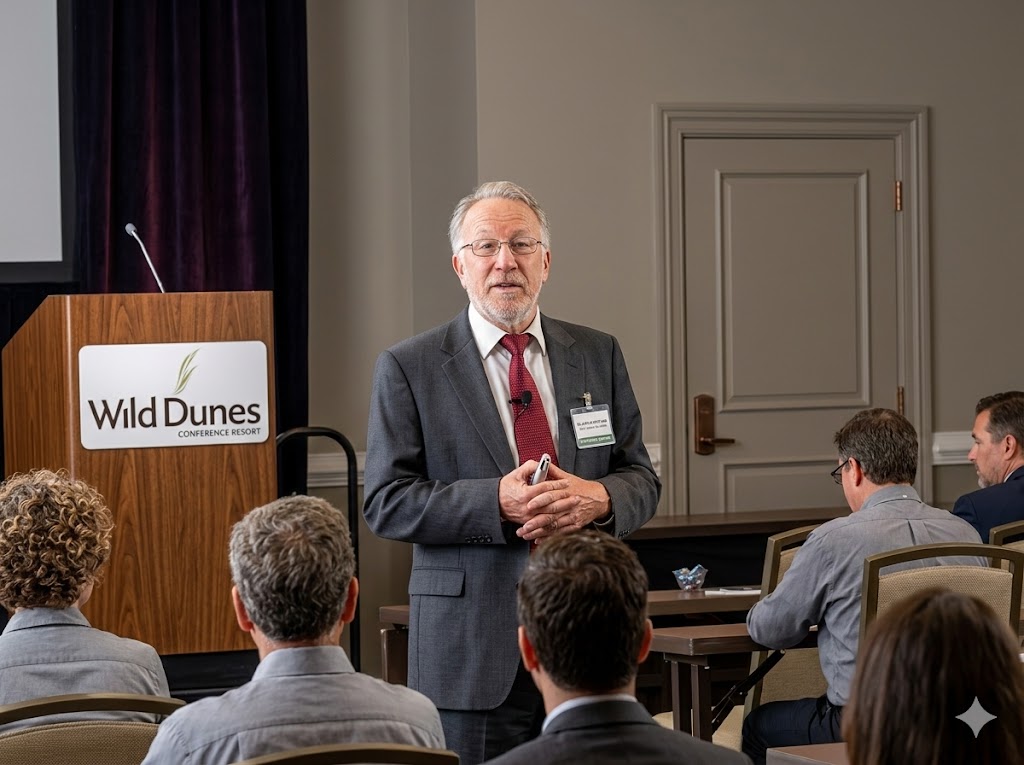
Mark's presentations can be customized as keynotes (45–60 min) or workshops (half-day)
Four core topics, each adaptable to your audience and format.
Curiosity Over Certainty
How "certainty" creates cognitive tunnels that blind us to the truth — and why curiosity is a strategic necessity for reducing bias and improving decisions.
Listening With Discipline
The science of active listening as a discipline, not a technique — quieting the internal monologue to capture critical data and foster real connection.
Dignity As A Strategy
How preserving the dignity of others, even in adversarial situations, leads to better cooperation, higher morale, and cleaner data.
The Science Of Human Behavior
A practical, research-based deep dive into memory, stress, decision-making, and rapport for auditors, investigators, and HR professionals.
Trusted by the nation's top institutions
Mark has served as a curriculum developer and lead instructor for the Federal Law Enforcement Training Center (FLETC) and the Inspectors General Criminal Investigator Academy, shaping communication standards for federal agents nationwide.
Featured in Authority Magazine: "5 Essential Techniques for Becoming an Effective Communicator"
Ready to bring Mark to your event?
Let's discuss how we can tailor a presentation for your audience.
Book Mark Today Send an email: manderson@andersoninvestigative.comFull and steadfast: the road after collapse
Most leadership and interviewing training focuses on control, certainty, and performance. This keynote begins where those approaches fail — in the moments when everything collapses and the room shrinks to two people. Drawing from a quiet personal loss that reshaped his life and work, Mark reveals why the most powerful form of authority is not loud, forceful, or performative. It is clean authority — grounded, humble, and full of presence.
This keynote is not about tactics. It is about transformation. It equips leaders and practitioners to remain steady when certainty vanishes, to communicate with dignity, and to lead from a place of grounded resilience.
"Leading from collapse is the skill no one asks for — until everything breaks."
The anatomy of collapse
Why the "Fixer" identity fails in high-stakes human dynamics — and how collapse exposes the limits of control.
- How certainty becomes a barrier to truth
- Why practitioners burn out under pressure-based models
- How collapse becomes a threshold, not an ending
"You cannot serve others if you have not learned how to sit with your own collapse."

The discipline of staying
A practical, science-based framework for presence — the skill that separates effective leaders from overwhelmed ones.
- How to stay grounded when you cannot fix what's breaking
- How to quiet the internal monologue that distorts listening
- How to create the "vacuum of truth" that invites authentic disclosure
"Presence is not passive. It is the hardest work we do when we can't fix what's breaking."

The redemption of silence
How silence becomes a clarifying tool — not a void — and why it is essential for interviewing, leadership, and human connection.
- Why most professionals fear silence
- How silence reveals truth and reduces cognitive bias
- How Mark's signature long pause becomes an experiential moment for the audience
"Hope doesn't arrive with trumpets. It rises like a slow, cleansing breath."

Teaching people to stand steadier, not push harder
We are living in an era of relentless disruption. Leaders, practitioners, and organizations are collapsing under the weight of uncertainty, burnout, and emotional overload. Traditional training teaches people to push harder. This keynote teaches them to stand steadier.
Mark bridges the humanity of the hospital room with the precision of the interview room:
Wellbeing is not optional — it is a performance requirement.
Presence is a technical skill, not a personality trait.
Humility and human dignity are the foundation of accuracy and trust.
"You can't interview well if you're not well."

The long pause
Every keynote ends with a moment of intentional silence — a long, uncomfortable pause that becomes the room's turning point. It is not a dramatic trick. It is a demonstration of the message itself. Audiences describe this moment as the part they remember most.
The discipline of staying. The courage to witness. The quiet defiance of hope.
Any group carrying the emotional weight of others
- Leaders navigating uncertainty
- Investigators and interviewers
- Human services professionals
- Healthcare teams
- Educators and trainers
- Organizations experiencing burnout, turnover, or cultural strain
What participants leave with
- A reframed understanding of leadership and interviewing
- Practical tools for presence and grounded communication
- A deeper capacity for resilience and emotional steadiness
- A renewed sense of purpose and clarity
- A quiet, steady hope for the road ahead
"The future won't look like the past, but it can be full and steadfast."
Booking Information
Mark is available for keynotes, leadership retreats, practitioner trainings, and organizational events — customized to integrate science-based interviewing, practitioner wellbeing, and leadership resilience.
Book Mark Today Send an email: manderson@andersoninvestigative.comTestimonials
Feedback from investigators, auditors and IG professionals who've trained with AIA.
Mark's training classes are a refreshing and engaging approach to gathering pertinent evidence during the interviewing process. He presents the material in a way that draws the audience in.
Mark's training is engaging, approachable, and genuinely enjoyable, yet firmly grounded in the latest science.
Mark has a myriad of law enforcement and public corruption investigation experience that makes him one of the highest rated instructors at the AIG Institutes.
Uniquely qualified to develop and deliver interviewing and interrogation training to new and experienced criminal and administrative investigators alike.
Mark's expertise in investigative interviewing sets him apart — an outstanding and enthusiastic instructor who received consistently favorable comments from students and colleagues.
Some of the best interviewing training I've ever seen and sent my detectives to. His practices and trainings evolve as he learns more from science-based information.
Frequently asked questions
What is Anderson Investigative Associates (AIA)?
What types of training services does AIA offer?
What does "science-based interviewing" mean?
Who should attend AIA training programs?
Are AIA's training programs customizable?
How is AIA's training delivered?
Can Mark speak at our conference or leadership event?
Why is science-based training important in investigations and interviews?
Can AIA training help with HR investigations and interviews?
How can I contact Anderson Investigative Associates?
Committed to truth through science-based interviewing.
Have questions about booking Mark for your next event?
(912) 571-6686